
Our approach
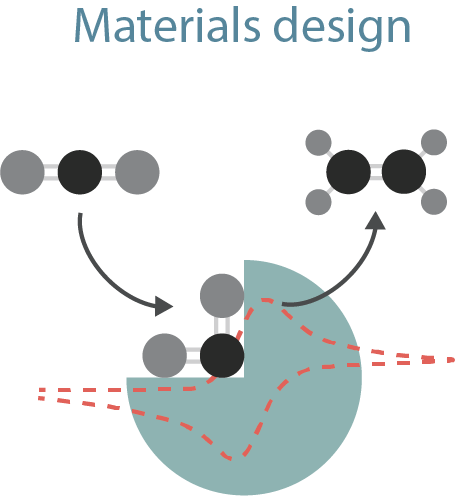
Design and synthesize advanced materials that enable energy- and cost-efficient separation and catalytic processes for circular carbon engineering
Ex: CO2 sorbents, electrocatalysts, and thermocatalysts
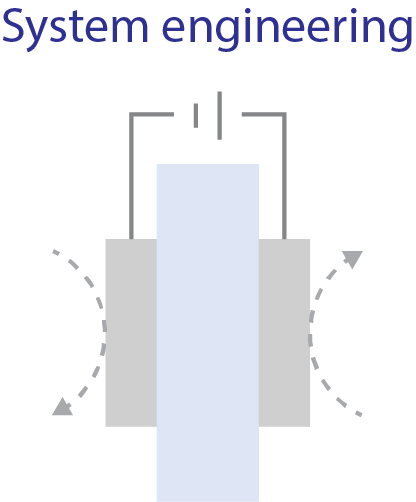
Design and build integrated systems that maximize the energy efficiency and scalability of separation and catalytic processes
Ex: CO2 capture devices and electrochemical platforms for CO2 conversion and critical mineral separation

Investigate chemical transformations of materials during separation and catalytic processes using operando spectroscopy
Ex: Operando X-ray spectroscopy (XAS, XPS) and operando Raman spectroscopy
Essential products of modern society, such as chemical feedstocks, fuels, and polymers, are still largely produced from fossil resources, releasing vast amounts of CO2 and accelerating climate change.
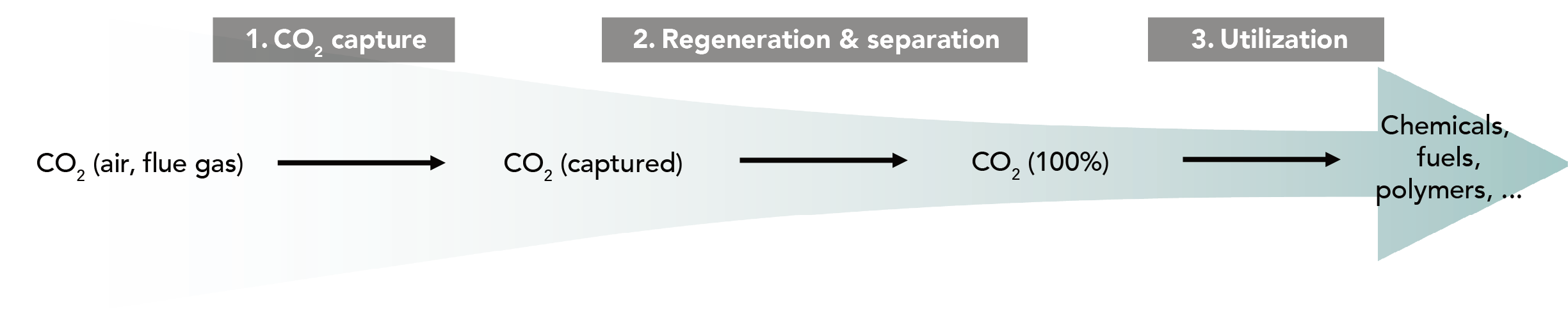
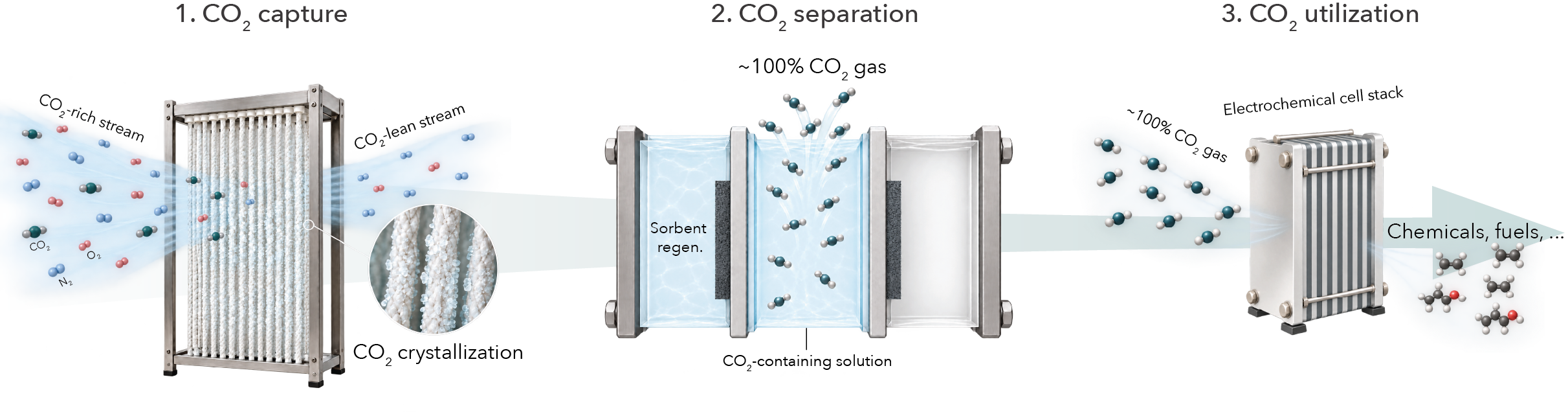
One promising route to carbon neutrality is to produce these carbon-based products by sourcing carbon from CO2 in air or flue gas, which we call “CO2-to-X”. Implementing an CO2-to-X pipeline involves three main steps: (1) capturing CO2 from air or flue gas, (2) regenerating sorbents while separating high-purity CO2, and (3) converting this CO2 into chemical feedstocks such as syngas or ethylene. These feedstocks can then be further upgraded into various products such as fuels or polymers.
To make this CO2-to-X pipeline viable, we need sorbents and catalysts that minimize energy demand in each process, and the entire system must be scalable to address the approximately 40 gigatonnes of CO2 emitted globally each year. To this end, our research focuses on developing scalable materials and systems to enable CO2-to-X pipelines at scale.


Hydrogen is another cornerstone of a carbon-neutral society. Beyond serving as a clean energy carrier for power generation, transportation, and steelmaking, hydrogen is an essential reactant in CO2-to-X, as it is used to upgrade the CO2-derived feedstocks into fuels and chemicals. Producing this hydrogen efficiently from renewable electricity is therefore key to achieving carbon neutrality.
High-temperature electrolysis, which operates at 600–850 °C using solid oxide cells, offers a distinct advantage here. At elevated temperatures, part of the energy required for water splitting can be supplied as heat, and reaction kinetics are greatly accelerated, enabling electrical efficiencies far exceeding those of conventional low-temperature electrolyzers.
To realize this potential at scale, we need electrocatalysts and cells that remain active and stable under harsh high-temperature operating conditions. To this end, our research focuses on developing durable high-temperature electrocatalysts and systems for efficient hydrogen production.